
Magnifica Humanitas
Plus, dismantling Meloni’s election narrative and Zerocalcare’s ‘Precarious Rhapsody’
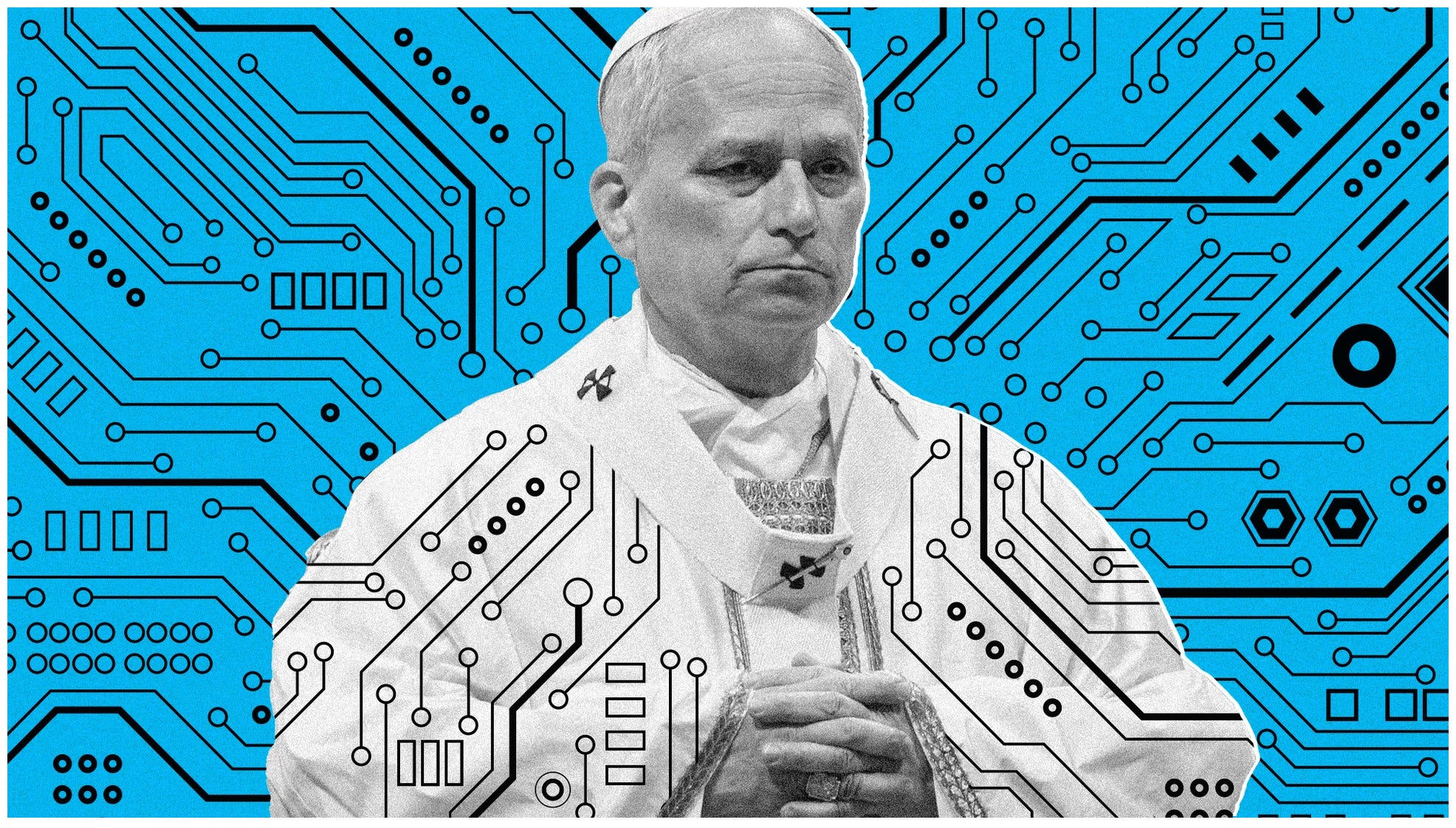
This Sunday, Pope Leo XIV gave a powerful speech at the Vatican about artificial intelligence that has been making headlines across Italy and indeed around the world. If you haven’t seen it, you can read the full text here. The title he chose was ‘Magnifica Humanitas’, a document addressing the safeguarding of the human person in the time of AI, and it is a fascinating look into the Catholic Church’s attempts to navigate the technological revolution we are currently living through. For months, apparently, AI lobbyists have been working to get the blessing of the Church for their work. In his first Encyclical, which he clearly timed to echo the 135th anniversary of Leo XIII’s controversial 1891 text Rerum Novarum, which tackled exploitation at the dawn of industrial capitalism, Leo gave them his definitive answer and a stark statement of purpose. AI, he writes in the document, risks creating “a new Tower of Babel” that can take us away from “the Truth, the Life”, humanity, and God. He explicitly challenged tech developers, like Anthropic co-founder Christopher Olah who was in attendance, to face up to a unique ethical and spiritual responsibility, noting that “every design choice inherently reflects a specific vision of humanity”. I admit I struggled a bit with the 42,000 words and the dense theological references, but much of the underlying critique resonated deeply, including the political claims. On war, for example, the Pope notes that AI risks sparking conflict more quickly and rendering it more impersonal by “lowering the threshold for resorting to violence, transforming defence into threat prediction and thus reducing victims to data”, concluding, thus, that AI should be “disarmed.” He also made a compelling call for workers’ rights, noting that AI risks creating digital slavery, turning today’s precariat into serfs of a virtual feudalism. As a non-Christian I have my long-standing issues with the Church, and though the Vatican is never free from its own institutional contradictions, the encyclical is worth reading, pondering, and taking seriously as an eloquent contribution to humanity’s wider efforts to navigate the tech dystopia that is unfolding. For more analysis check out Jill Lepore’s piece in The New Yorker here.
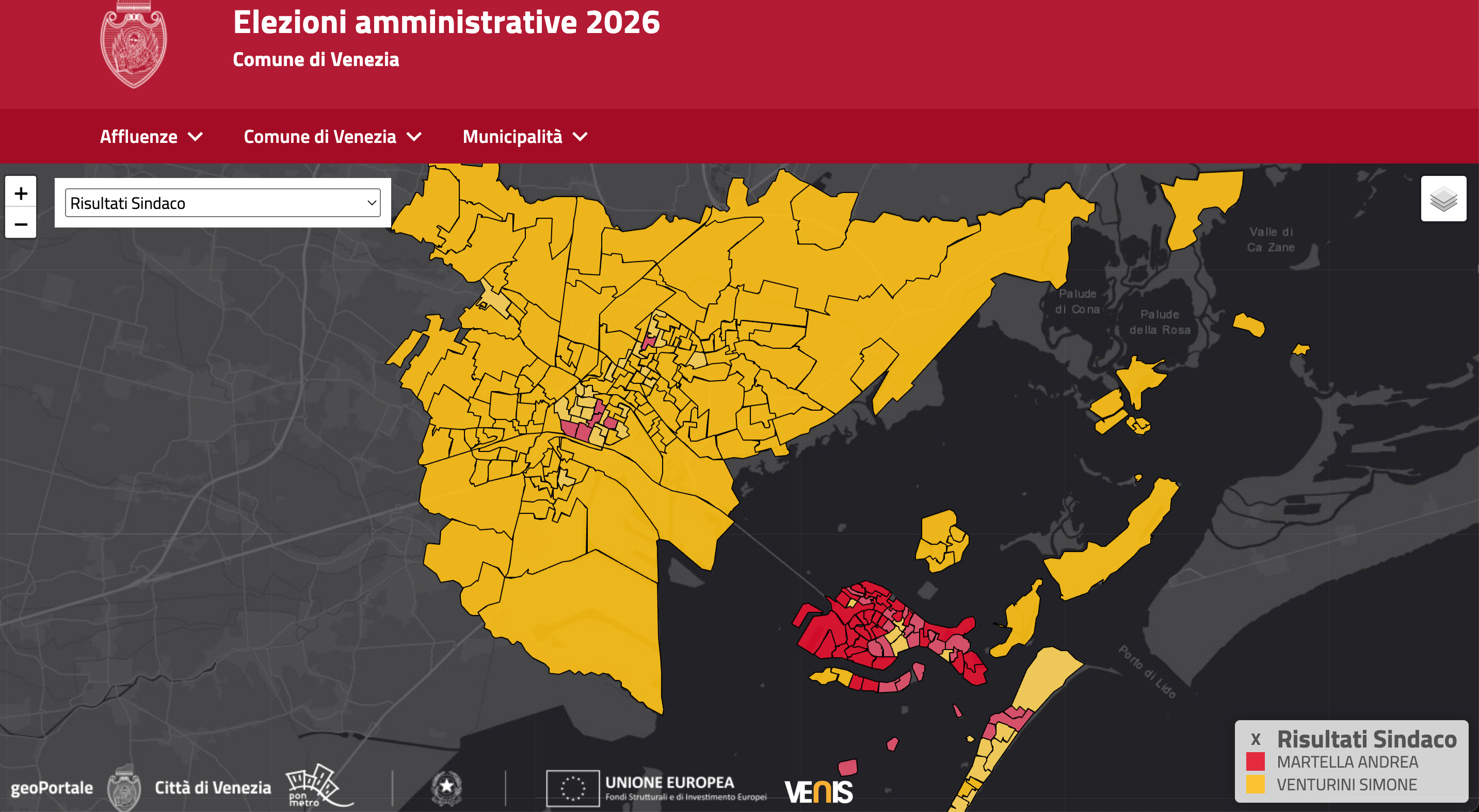
But onto more prosaic matters. Giorgia Meloni was quick to claim total victory following last weekend’s local elections, and if you read the international press this week, that’s the story you’ll be likely to read. Oddly enough, however, it’s not really what the numbers show. Yes, it’s true the right-wing coalition secured high-profile headlines by holding Venice and flipping Reggio Calabria in the south. Treating this as a clean sweep, however, ignores a formidable progressive resilience across the rest of the peninsula. In Salerno, the centre-left won an emphatic first-round victory behind Vincenzo De Luca, matching solid triumphs in traditional strongholds and battlegrounds like Prato, Pistoia, and Mantova (where, by the way, the progressive candidate Andrea Murari won almost 70% of the vote). Even apparent failures offer strategic silver linings. In Venice, while the PD mayoral candidate Andrea Martella failed to dominate and secure the outright win that was hoped for, looking closer at the municipal numbers reveals a less bleak reality. In the city centre, the PD actually won 24.8% of the vote as a single party, outperforming the entire combined right-wing list of FdI, Lega, and Forza Italia, who won 20.12%. The structural lesson, alas, remains familiar: once again, the mainland working-class vote in Mestre and elsewhere did not turn out for the left. Despite the rhetorical adjustments, progressive messaging simply isn’t breaking through outside the urban centres. At the end of the day, this was a rather snoozy set of local elections. While far from a triumph for the opposition, the results confirmed, once again, that the right-wing wave is no longer unchallengeable.
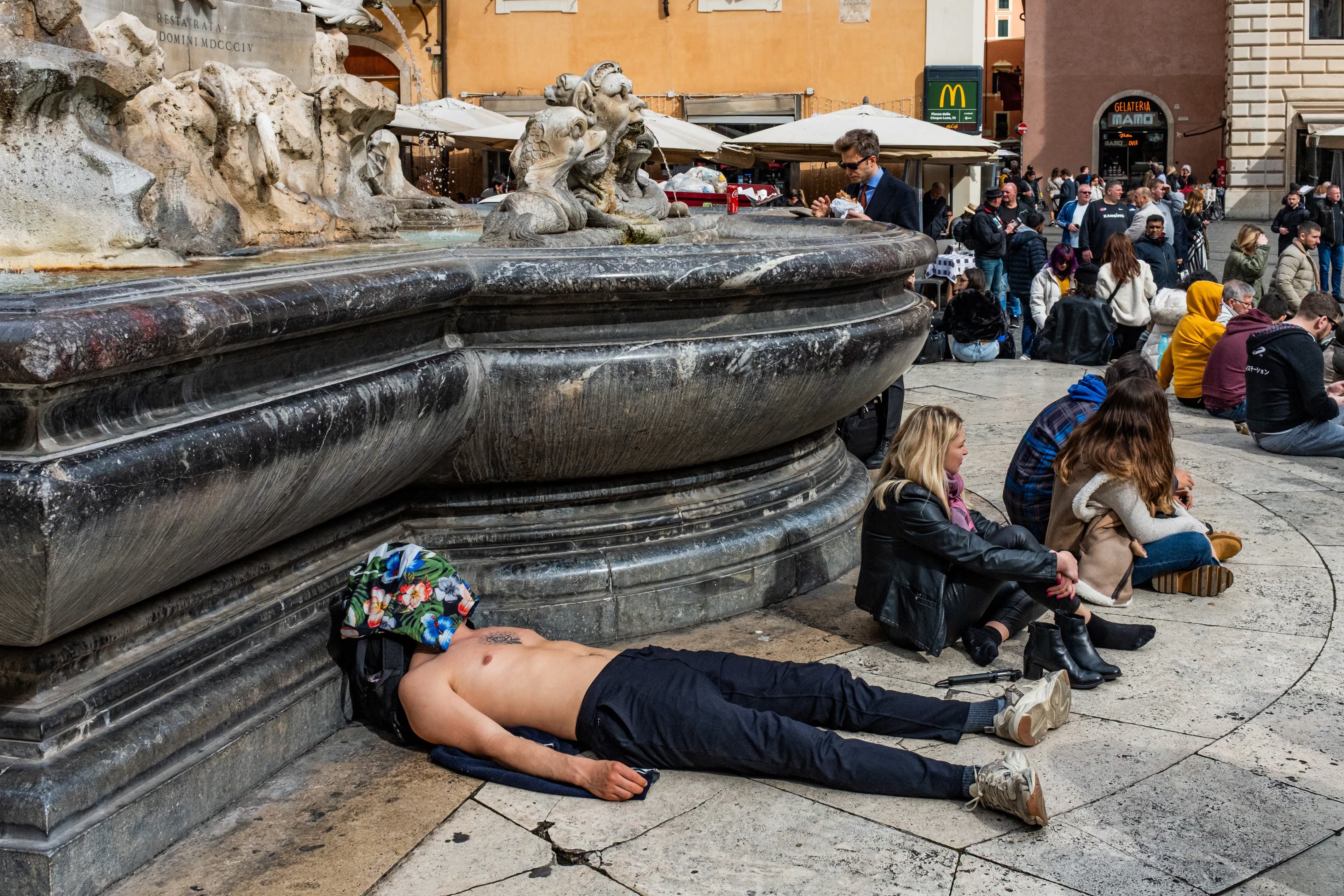
If you’ve spent any time in Rome over the past couple of years, you will no doubt have found yourself navigating the ubiquitous scaffolding, dust, and diversions that have accompanied the run-up, duration, and aftermath of the Jubilee. It has been an exhausting chapter for the capital, and a brilliant photo essay in The Guardian by photographer Lorenzo Grifantini does a good job of capturing the psychological and spatial toll of it all. Grifantini documents how the forces of mass tourism and hyper-tourism have quietly restructured urban space, carving the historic centre into restrictive corridors and strange zones of containment. Walking through Rome right now, it becomes obvious how public space has been organized entirely around the management and circulation of visitors rather than local life. He documents the “metal barriers redirecting pedestrian flows away from the very monuments people travel to see”, the “portable toilets that sit awkwardly beside churches and Renaissance walls”, and open public piazzas “reduced to mere holding pens, transit checkpoints, and spaces of constant exposure.” It is an essential, visual record of the changing city, so check out the full gallery of shots here.
Arts & Culture: Precarious Rhapsody
Zerocalcare - Italy’s most famous fumettista - is back with a new animated series for Netflix this week, and, as far as Italian TV goes, this is probably going to be one of the better shows of the year. Due Spicci (My Two Cents) follows on directly from the previous instalments of Strappare lungo i bordi (Tear Along the Dotted Line, 2021) and Questo mondo non mi renderà cattivo (This World Can’t Tear Me Down, 2023), but the premise goes even deeper into the collective despair unleashed in the years of financial crisis. This time round Zero and his sidekick Cinghiale have decided to set up a small bar-restaurant in a peripheral Roman neighbourhood, only to discover that the economics are so challenging they find themselves on the verge of mental breakdown. As characters from the past turn up, and reality dissolves into fantasy, the pair struggle to navigate the fallout of their failing entrepreneurial venture, and come to terms with their own exhaustion. There are few narrators of the Italian present better than Zero, so if you haven’t checked out his stuff before, I implore you to rectify that immediately. The new show is streaming now on Netflix [and if you read French and have a subscription to Le Monde, they’ve done an interesting interview with him here.]
If you’ve ever listened to the Gola podcast, or followed any activities of the Dante Society of America for that matter, you may be familiar already with the work of Danielle Callegari, the author, academic, and food writer. Best known for her academic work at Dartmouth College, and more recently for her wine journalism, Callegari is a multidisciplinary scholar who skilfully mixes research with public communication, depth with clarity. This week she has a new popular history book coming out called A Bite-Sized History of Italy: Gastronomic Tales of the Roman Empire, Renaissance, and Republic, which I am really looking forward to. As the title suggests, this is a romp through the origins of Italian food, tracing the myths, real stories, and developments of some of the country’s most well-known dishes, including the ancient Roman obsession with garum, Mussolini’s failed propaganda campaign to replace pasta with rice, and the recent international headlines made by ‘Carbonaragate.’ Don’t be put off by the somewhat vulgar cover. Callegari is a serious writer and this is sure to be excellent. So order a copy here.

Recipe of the Week: Tomato Salad with Basil-Pea Puree
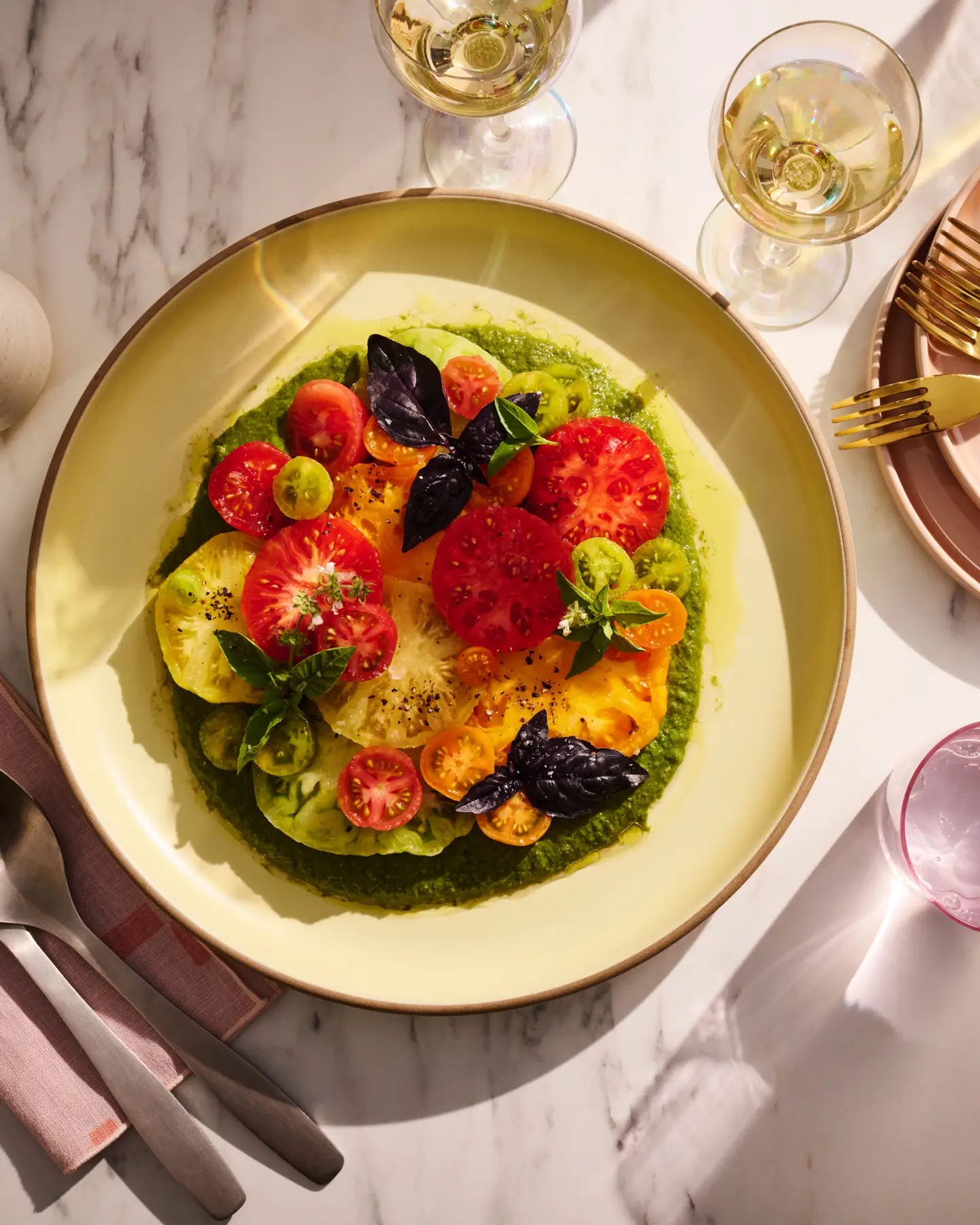
Everywhere you look online right now, there is a distinct panic over the heatwave. With months of these temperatures stretching ahead of us in Italy, and the knowledge that this is merely a foretaste of worse to come, I’ll spare you yet another apocalyptic climate take for now. What I do want to share is an excellent option for the summer table that I came across by chance while browsing through Saveur magazine this week: this beautiful recipe for a tomato salad with a basil-pea puree. The dish borrows from contemporary American and French culinary sensibilities, but the core flavour profile is pure Ligurian Riviera: that classic pairing of ripe tomatoes and bright greens, given an aromatic lift here by a splash of fresh lime juice. This is a flexible template rather than a rigid instruction; you can use any mix of tomatoes, provided they are organic and at peak ripeness, and, of course, adjust the herb proportions to your preference. Whatever you do, I can vouch that, served alongside a chunk of crusty bread, it is a perfect, effortless summer lunch. So check out the link here.
I’m Jamie Mackay, a UK-born, Italy-based writer, working at the interfaces of journalism, criticism, poetry, fiction, philosophy, travelogue and cultural-history. I set up the Week in Italy a few years ago to cover ‘under the radar’ news. Since then this space has evolved to focus on politics, social issues, travel, books, music and film with particular attention to indie and underground culture that doesn’t get enough press. This is a labour of love, and journalism is my full time job, so if you like what you read please consider a paid subscription, buying my book, The Invention of Sicily, or simply help spread the word. Grazie!