
No platform for Vannacci
Plus, fiction by Andrea Bajani and Moroseta’s apricot gazpacho
The Italian political scene has been dominated by one news story in particular this week: the apparently irresistible rise of the far-right general, Roberto Vannacci. I would truly like to sidestep this story, but, alas, it is becoming increasingly central to understanding how the country is transforming. Last week, Vannacci made headlines once again when the journalist Lilli Gruber interviewed him for a full 40 minutes on her primetime talk show Otto e mezzo. You can watch the full recording here. During the interview, Gruber probed the general on a range of issues, adopting a critical, indeed openly hostile, position. While Vannacci offered pre-prepared soundbites about the heterosexual family, sovereignty, and migration, the interviewer was ready with retorts. The most shared clip centred on gay rights, where the general claimed that “[LGBTQI+] people already have all the rights they need,” that sexuality is a “purely personal preference,” and that people should be encouraged to reproduce in the natural, “normal” way. From this point on, the conversation degenerated. Sensing an opening in his obscure anti-woke arguments, Gruber jumped on the opportunity: “You seem very obsessed with homosexuals [Mr Vannacci]. What if we were to discover you were gay? What then?” Much of the mainstream media, including lifestyle magazines like Vanity Fair, reported the exchange as a clear “win” for Gruber; as if this serious political interview were a rap battle or a sports competition. The sad truth is, though, that while the general did indeed make a fool of himself, not everyone will see it that way. Numerous studies have shown that providing far-right figures with a platform serves to normalize their arguments, granting them a legitimacy that ultimately undermines democratic values. Vannacci’s rise is far from inevitable, but we miss the point entirely if we measure political victories in viral clips. Entertaining as the spectacle was, Gruber’s interview ultimately did the general’s hard work for him: handing his fringe ideology the centre-stage and attention it needs to grow.
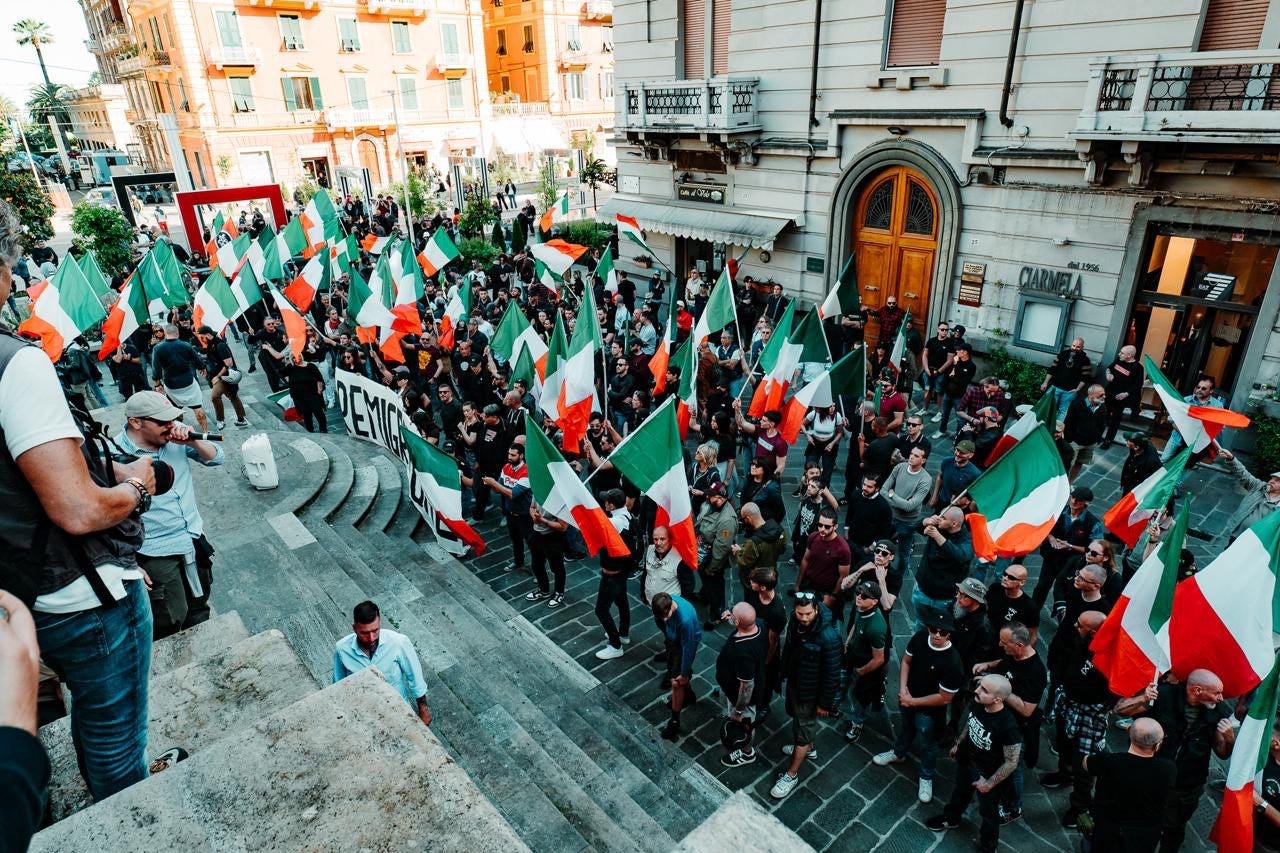
This story is worth sticking with a little longer, not least because its implications spilled directly into Italy’s piazzas over the weekend. On Saturday, just days after the Gruber interview, thousands of far-right supporters converged on Rome, mobilized by a citizens’ initiative calling for immediate, mass deportations. The crowds included a significant contingent of Vannacci and Futuro Nazionale loyalists whose demeanour was aggressively hostile and, notably, anti-Meloni and anti-Salvini; it was an astonishingly shortsighted claim given that this administration is already one of the most punitive on migration in recent Italian history, yet the demonstrators routinely denounced the current coalition partners as “weak” sellouts who have failed to deliver. Thankfully, opposition movements mobilized to offer a more constructive vision of society. As Futuro Nazionale marched, anti-fascist and pro-democracy demonstrations swept through the centre of Rome. Thousands turned out to defend the rule of law, advocate for comprehensive European asylum frameworks, and offer an internationalist alternative to a narrow sovereigntist agenda. Heartwarming as these scenes were, I couldn’t shake a creeping sense of dread at the familiarity of the binary. As a veteran of the anti-Salvini protests a decade ago, I know exactly how quickly grassroots energy can dissolve into institutional and electoral defeat. With street-level tensions rising once more, my fear is that Italy’s civil society and its democratic parties remain too far apart, too deeply divided in culture, for this confident popular opposition to translate into a coherent political program. For more analysis on the ideological clash, check out this cool-headed analysis by Annalisa Camilli over at Internazionale.
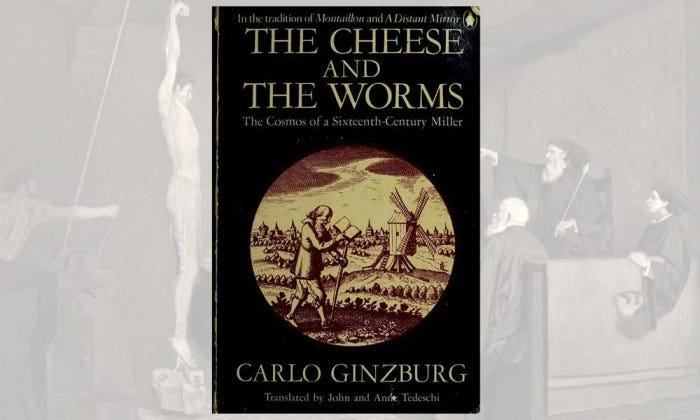
In my work as a cultural historian, I’ve had the great fortune of being mentored by intellectuals with two remarkably similar names. Paul Ginsborg, the British historian, was instrumental during my early years in Italy; I used to meet regularly with him to discuss Italian politics, and it was he who inspired the creation of this newsletter around the time of his death in 2022. Another great influence, who I had the honour of meeting on several occasions, was Carlo Ginzburg, the legendary Italian historian, child of novelist Natalia Ginzburg, and author of foundational books of microhistory including The Cheese and the Worms, a study of the life and beliefs of Domenico Scandella, aka Menocchio, an Italian miller who was killed in the sixteenth century for his heretical beliefs. Well, Ginzburg died yesterday, so I couldn’t not add a note to mark the moment here for a man who, like no other, taught me how to read primary sources, to see the gaps in the historical record, and to deduce, and not just imagine, wider social implications. Ginzburg was a master at seeing grand historical trends in daily life, in diets, daily routines, songs, furniture, artifacts, maps, and texts. He staunchly sought out and defended the marginalized and subaltern in conventional history, demonstrating a clear method for how to give life to the workers and everyday people who actually made the medieval and so-called early modern worlds. So RIP Carlo, and if you don’t know his work, check out the obituary here and make sure to stock your shelves with his many thought-provoking books.
Arts & Culture: Family Taboos
Fiction fans, this one’s for you: this week The New Yorker published a striking new story by Andrea Bajani, the acclaimed Florentine writer and Premio Strega winner who has built a formidable reputation in the Anglophone literary world in recent years. The story, ‘Constellation’, is adapted from his 2025 novel L’anniversario (The Anniversary), and it confronts themes of memory, family trauma, and domestic violence with a candour that remains rare among Italian authors, particularly male writers. The novel functions as a radical, taboo-busting critique of the nuclear family, interrogating the weight of inherited social duty and advocating instead for individual rights and personal freedom. Without giving too much away, the narrative hinges on a moment of profound shock, as the protagonist forces himself to confront the reality of his father’s violence against his mother, revealing how a toxic inheritance of guilt, complicity, and disgust can warp a person’s entire lifetime. You can read the full story here, and I highly recommend checking out his interview with Nina Mesfin for a deeper, more critical exploration of the novel’s vital themes.

Yet more exceptional music is coming out of the south of Italy this week. While hunting for further signs of the regional flourishing and self-confidence I wrote about in last week’s newsletter, I stumbled across a new release by the Sicilian collective Lero Lero that has been on repeat for days on my Spotify. The group has a fascinating remit: to unearth and elevate Sicily’s disappearing folkloric music by mixing archival field recordings and forgotten twentieth-century audio samples, then using these materials as the bedrock for a forward-looking, techno-infused reimagining of the island’s oral traditions. This is far from a standard heritage folk record, then. By bringing together academic researchers, traditional multi-instrumentalists, anthropologists, and contemporary electronic producers, Lero Lero captures a deeply rooted, bottom-up portrait of what Sicilian culture was, what it is today, and, most provocatively, what it might yet become. You can read an excellent feature on their process over at Rolling Stone and stream the full album here.
Recipe of the Week: Apricot and roasted vegetable gazpacho (Moroseta)
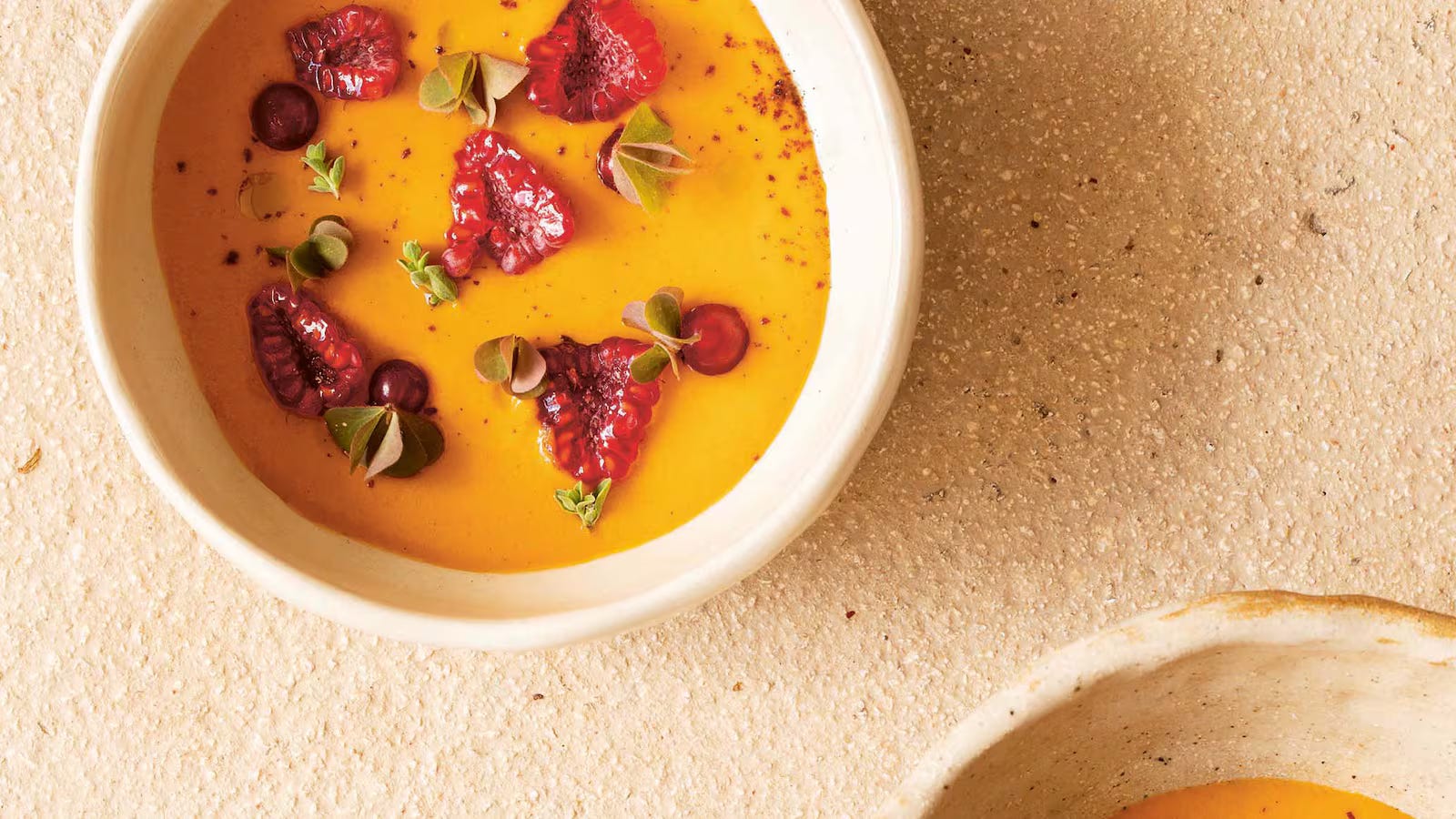
This week’s recipe is, quite frankly, the one I’ve been most excited to share with you all for a long time. It all began a few weeks ago when I decided to pick up a copy of the Masseria Moroseta Cookbook, a brilliant collection by Giorgia Goggi, head chef at the celebrated Puglian agriturismo. Every dish in it is a winner; though somewhat cheffy, the recipes are designed to help home cooks up their game and unlock entirely new techniques. To get the ball rolling, I tried Goggi’s unique take on gazpacho, the Spanish staple so beloved in summer across Italy, which introduces a host of unexpected ingredients including bell peppers, carrots, and apricots. Yes, you read that correctly: apricots! Despite sounding highly unorthodox, the result is exquisitely balanced; unlike a raw traditional gazpacho, the fruit and vegetables are roasted first, creating a deep, smoky, almost jammy complexity. Goggi also adds a vibrant topping of fresh raspberries, redcurrants, and sumac which provides a sharp, tart contrast that, to my taste, is completely addictive. This is the best thing I’ve cooked this summer, so do check out the full instructions reprinted over at the Irish News to reproduce the dish in your own kitchen.
I’m Jamie Mackay, a UK-born, Italy-based writer, working at the interfaces of journalism, criticism, poetry, fiction, philosophy, travelogue and cultural-history. I set up the Week in Italy a few years ago to cover ‘under the radar’ news. Since then this space has evolved to focus on politics, social issues, travel, books, music and film with particular attention to indie and underground culture that doesn’t get enough press. This is a labour of love, and journalism is my full time job, so if you like what you read please consider a paid subscription, buying my book, The Invention of Sicily, or simply help spread the word. Grazie!